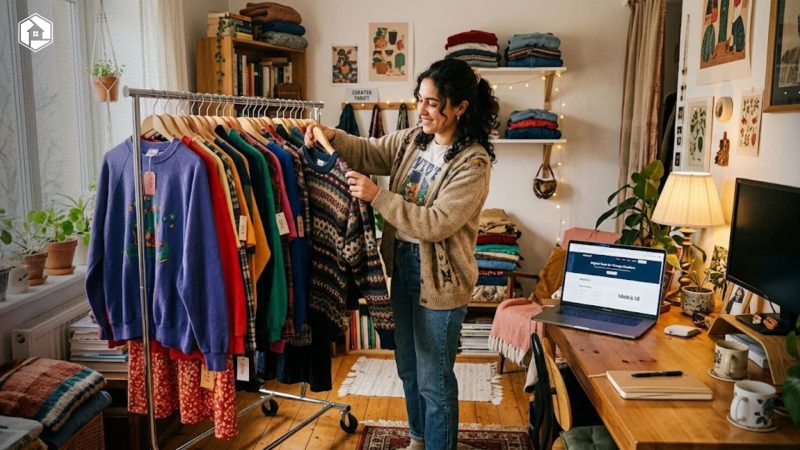
IDEBIZ — You want to start a thriving reselling business, but you feel overwhelmed by inventory sourcing and pricing strategies. Building a digital thrift brand actually offers low startup costs and massive profit margins.
You can launch a profitable shop from your bedroom with a smart strategy and the right digital toolkit. Let’s walk through the exact step-by-step roadmap to build a brand that turns pre-loved clothes into daily profit.
Step 1: Find Your Niche and High-Demand Products
Selling “everything for everyone” usually kills new thrift shops fast. The secret to fast growth relies on strict curation. When you narrow your focus, you instantly attract dedicated shoppers who gladly pay premium prices.
High-Margin Thrift Niches to Target Today
-
-
90s & Y2K Vintage: Graphic tees, baggy denim, windbreakers, and brand-name hoodies.
-
Minimalist Workwear: Carhartt jackets, Dickies pants, utility vests, and earth-tone flannels.
-
Aesthetic Outerwear: Oversized trench coats, leather jackets, and knit cardigans.
-
Gorpcore & Outdoor: Vintage Patagonia, Columbia, Arc’teryx, and tactical fleece.
-
Focusing on one clear style helps you build a strong visual identity. It also helps you write targeted product titles that rank quickly in online searches.
Step 2: Source High-Quality Thrift Inventory
Your profit happens when you buy, not when you sell. Finding trustworthy suppliers makes or breaks your brand.
       [ Thrift Sourcing Strategy ]
                  │
      ┌───────────┴───────────┐
      ▼                       ▼
┌──────────────┐       ┌──────────────┐
│  Handpicked  │       │ Factory Bales│
├──────────────┤       ├──────────────┤
│ Higher Cost  │       │ Lower Cost   │
│ 0% Waste     │       │ 20-30% Waste │
│ High Margin  │       │ Bulk Volume  │
└──────────────┘       └──────────────┘
Bales vs. Handpicked Sourcing: Which One Is Best?
-
-
Handpicked Wholesale (Recommended for Beginners): You visit local suppliers, flea markets, or thrift warehouses and select each item individually. You pay slightly more per piece, but every item is sellable.
-
Factory Bales (50kg – 100kg Sacks): You buy bulk sealed bags at a very low cost per item. However, expect 20% to 30% waste due to stains or damage.
-
Start with handpicked inventory to protect your initial cash flow. Once you build steady cash flow, explore factory bales to scale your supply chain.
Step 3: Grade, Clean, and Price for Maximum Profit Margin
Never post unwashed or wrinkled clothes online. First impressions directly dictate how much money buyers spend.
Wash every piece thoroughly, steam out all wrinkles, and fix minor flaws like loose threads or missing buttons. Transparently report minor flaws in your product descriptions to build lasting customer trust.
The Simple Profit Margin Formula
Use this practical calculation to set healthy prices for every item:
Here is a real-world numerical example:
-
-
Item Cost (Vintage Denim): $7.00
-
Cleaning & Polymailer Packaging: $2.00
-
Base Cost Price: $9.00
-
Target Markup (4x): $9.00 \times 4 = $36.00 Retail Price
-
Net Profit: $27.00 per item
-
Pricing your curated pieces at a 3x to 5x markup covers marketing expenses while leaving healthy profit margins in your pocket.
Step 4: Shoot Cinematic Product Photos & Set Up Shop
High-quality visuals instantly upgrade thrift items into boutique fashion pieces. You do not need an expensive DSLR camera; a modern smartphone camera works perfectly.
-
Use Natural Light: Shoot near a large window during morning hours to capture realistic item colors.
-
Keep Backgrounds Clean: Use a white wall, a concrete backdrop, or a minimalist wooden floor.
-
Show Fit and Scale: Use a clean clothing hanger, lay items flat neatly, or hire a friend to model the clothes.
-
Capture Key Details: Photograph the brand tag, fabric texture, zipper details, and any vintage distressing.
List your inventory across your own website and active social channels. Clear photos combined with accurate size measurements speed up buyer decisions dramatically.
Step 5: Market Your Online Thrift Store with Zero Budget
Consistent visual content powers modern digital marketing. You can grow a loyal following quickly without spending money on paid ads.
-
Post Packing Videos: Record quick behind-the-scenes clips while packing orders with aesthetic tissue paper and custom stickers.
-
Share Outfit Styling Tips: Create short video reels showing three ways to style one vintage item.
-
Run Drop Events: Instead of posting items randomly, announce weekly “Inventory Drops” (e.g., Every Friday at 7 PM). This creates urgency and drives instant sales spikes.
Engage actively with every comment and message during your launch phase. Personal customer interactions turn one-time shoppers into repeat brand advocates.
Smart Next Steps for Your Thrift Empire
Starting an online thrift store provides incredible flexibility and rapid profit potential. Focus on a tight niche, keep your sourcing costs under control, and present your items with crisp photography.
When you combine consistent branding with smart financial calculations, you turn a weekend reselling hobby into a thriving digital enterprise.
FAQ SEO (Popular Questions)
How much money do I need to start an online thrift store?
You can start an online thrift store with $100 to $300. This budget covers your initial inventory batch of 15–20 handpicked items, basic eco-friendly packaging materials, and minor washing supplies.
Where is the best place to sell thrifted clothes online?
Selling directly through a custom website backed by active social media platforms gives you full brand control and higher profit margins. You can also leverage local reselling marketplaces to cross-list items and move inventory faster.
Is an online thrift store business still profitable?
Yes, online thrift businesses remain highly profitable because sustainable fashion demand continues to surge globally. Curated thrift stores that target specific niches easily achieve profit margins between 60% and 80%.
Starting a thrift business sounds exciting, but managing inventory, calculating profits correctly, building a strong digital brand, and sourcing reliable suppliers can feel confusing without expert guidance. You don’t have to figure it all out alone through expensive trial and error.
Idebiz provides direct mentorship and step-by-step business training programs designed specifically to help MSMEs, fashion entrepreneurs, and digital resellers launch sustainable, high-profit businesses. Learn directly from experienced practical mentors and build your business with confidence!
📞 Contact Idebiz to Register for Business Coaching:
-
📲 WhatsApp Admin: 0813 805 8460
-
🌐 Official Website: www.idebiz.id
-
📸 Instagram: @Idebiz_id