IDEBIZ — Transitioning from a single thriving delivery-only hub to an international multi-unit enterprise requires more than great recipes. Virtual brands run on operational precision, data-driven decisions, and bulletproof automation. When you prepare to cross borders, you shift your primary focus from cooking food to scaling systemized processes.
To scale cloud kitchen business operations into an international franchise, brand owners must centralize supply chain logistics, strictly standardize kitchen SOPs, and optimize unit economics for high-margin repeatability. According to industry data from Idebiz.id, successful expansion relies on leveraging cloud-based kitchen management technology alongside adaptable cross-border franchise models that preserve brand identity while matching local market palates.
You cannot auto-generate a bulletproof global franchise agreement or financial model from search snippets alone. Download our free Idebiz Cloud Kitchen Franchise Expansion Kit (Excel HPP Calculator + SOP Checklist) to stress-test your kitchen’s unit economics before expanding overseas.
The Blueprint to Scale Cloud Kitchen Business Globally
Expanding internationally means your operational framework must run flawlessly without your physical presence. Modern diners demand consistent quality whether they order in Jakarta, Singapore, or London.
1. Standardize Culinary SOPs for Zero-Friction Replication
Your signature dishes must taste identical across every single franchise location. Document every step of prep work, portion control, and cooking times with step-by-step video guides and exact weight measurements.
Eliminate complex cooking techniques that rely on personal chef skills. Instead, utilize pre-portioned ingredients, central prep kitchens (commissaries), and smart kitchen equipment to guarantee consistent quality every time.
2. Optimize Unit Economics Before Multi-Unit Expansion
Never attempt to scale an unprofitable or barely break-even ghost kitchen. Focus intensely on maximizing your EBITDA margins and shortening your pay-back period at the primary location first.
| Operational Metric | Target Benchmark | Why It Matters for Franchising |
| Cost of Goods Sold (COGS) | 28% – 32% | Keeps raw material costs low for master franchisees. |
| Labor Cost | Below 18% | Maximizes kitchen efficiency via automation. |
| Packaging & Delivery Fees | Under 25% | Preserves net profit margins after platform commissions. |
| Kitchen Footprint Efficiency | $1,200+ revenue/sq ft | Proves high spatial productivity to prospective investors. |
3. Leverage Agnostic Kitchen Tech for Seamless Operations
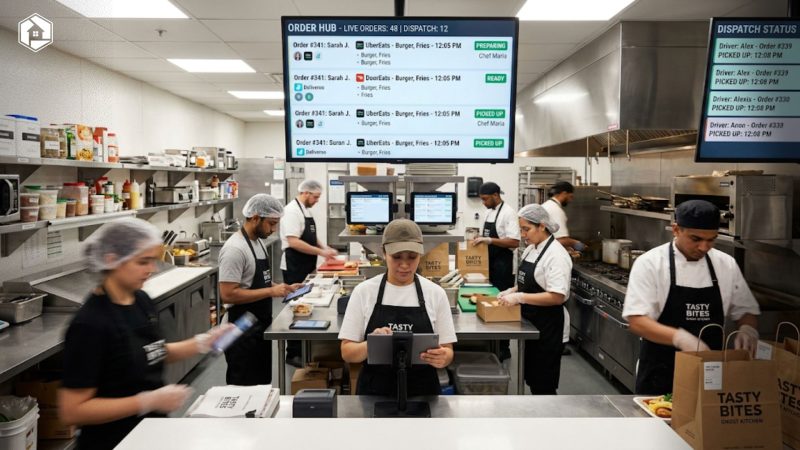
An international franchise network relies on real-time visibility. Deploy a centralized Point of Sale (POS) and inventory management system that integrates directly with local third-party delivery aggregators.
Automated inventory tracking prevents stockouts, reduces food waste, and flags cost variances immediately across distant franchise locations.
Navigating Cross-Border Regulatory and Supply Chain Challenges
International growth introduces complex trade compliance rules, ingredient sourcing hurdles, and variable health safety regulations.
Partner with reliable regional distributors to source essential dry goods and specialized packaging materials. For perishable ingredients, establish localized supplier audit standards so your master franchisees maintain strict food safety without importing every single ingredient.
Adapt your menu intelligently. Respect local dietary requirements and cultural preferences while keeping core brand signatures completely intact.
[ Read : How to Start a Viral Home Bakery Business ]
Designing a Scalable Franchise Model for Global Partners
Selling a cloud kitchen franchise requires offering a clear, turn-key business system. Investors choose virtual brands because they require lower upfront capital expenditure compared to traditional dine-in restaurants.
Highlight your reduced real estate overhead, rapid launch timelines, and automated tech stack during sales pitches. Structure your franchise fees logically—offer master franchise rights for whole territories to experienced operators who possess established local logistics networks.
Frequently Asked Questions
What is the biggest challenge when scaling a cloud kitchen internationally?
Maintaining consistent food quality and supply chain stability across borders presents the largest hurdle. Solving this requires strict SOP standardization, commissary reliance, and local ingredient auditing.
How much capital is needed to scale a cloud kitchen business into a franchise?
Capital requirements vary by region, but cloud kitchens generally require 60% less initial capital than traditional restaurants due to smaller footprints, zero front-of-house renovation, and leaner labor teams.
Can virtual brands succeed in foreign markets without physical dining rooms?
Yes. Virtual brands thrive internationally by capitalizing on high mobile delivery penetration, hyper-targeted digital marketing, and localized aggregator partnerships.
Ready to transform your local food business into a high-growth franchise network? Expanding internationally demands expert guidance, structured blueprints, and proven execution strategies. Idebiz offers comprehensive training programs and strategic business coaching designed specifically to help food entrepreneurs master supply chain setups, legal franchising frameworks, and operational scaling.
📞 Contact Idebiz to Register for Training:
-
📲 WhatsApp Admin: 0813 805 8460
-
🌐 Official Website: www.idebiz.id
-
📸 Instagram: @Idebiz_id